Home Blog Page 9

Twenty Wishes For The 20s

As we wrap up this decade, and marvel over all of that has happened (or not) to all of us, I thought it would be fun to offer twenty wishes for creative business professionals as they head into 2020 and beyond.  They are in no particular order and are offered in the spirit of giving and warm wishes for all that is to come.  See you in 2020.

1. Choose yourself — start a podcast, write a book, start a community.  Your voice matters and knowing why you are the artist you are is everything.

2. Learn to learn — whether it is an improv class, on-line coding course, a conference outside of your field (i.e., storytelling, creative writing??), or even a dance class, challenging yourself to learn not just new things but how to learn new things will never cease to serve you. 2030 is just a decade away and it will look nothing like 2020.

3. Read The Goal – Iconic process will continue to become the sine qua non of creative business.  If HOW you do business does not align with the art you want to create you will find yourself on the scrap heap of the marginal ever faster.  And, yes, my 20 minute offer stands until March 1st.

4. Discover your outrageous promise and your outrageous demand – knowing the one thing that matters to you, the one thing that transcends time is a bedrock.  Without the pillar of truth, you cannot ask for the radical effort you are going to need to deliver that truth every time you undertake a project.  In a sea of pretty, authentic design is what really matters.

5. Take a walk every day – Hey, if Steve Jobs, Bill Gates and Warren Buffet can all take the time each day to just think about what is to come next, so can you.

6. Become a better communicator – I am not talking about Toastmasters (though a great organization).  Creative businesses are the ultimate translators — you listen with your ears (and maybe your eyes) and then have to express what you heard in a way that conveys your understanding most often in another sense – perhaps sight, touch, taste and smell. That is hard, really hard since likely the person you have to communicate back to is not nearly as versed in that sense as you are.  Yet, the tools of presentation have never been better and are literally exploding before our eyes — 3D (rendering and printing), virtual reality, etc.  If you become a better storyteller with your ideas, the more likely these ideas will see the light of day.

7. Understand that value is temporal – The shelf life of ideas and effort is ever shorter.  Once you deliver on a promise, failure to get paid (either with a decision and/or dollars) will be ever more problematic. Easy — know your value, deliver your value and get paid for it.  Every day.

8. Ignore the noise — All creative business is about relationship, whether for a week, a month, even years.  The idea to scale or not, sell, sell, sell, go this way or that is a fools errand.  Look at your feet, then look up. See where you want to go, now walk there. Radical authenticity does not mean a transformation, it means specificity and intolerance to platitudes.  You do you without compromise.  See where that takes you in the 20s.

9. For 2020, change one big thing each month — If you really built your creative business to serve those that care the most, then you will be able to dramatically improve one thing in your art and/or your creative business each month.  Yes, the Apple Tree always needs pruning.

10. Let your business be creative – the story your business tells exists to support the story your art tells.  Better said, what your business requires to be successful is meant to exist so that you can create and produce your best art every single time you are engaged to do so.  If you are doing what is expected as a business, you are fitting a square peg in a round hole. Yeah, do not do that and have the courage to stop without apology.

11. Your work matters – If you do not believe you art exists to transform the lives of those it is created for, who will?

12. Everything you do can be done cheaper – just not by you or your creative business.  See “your work matters” above.

13. Pigs get fat, hogs get slaughtered – if you are in business to maximize today, you will never understand the value of tomorrow.  Your community is built one person at a time.  Long term, ongoing investment and return on that community is the proverbial tortoise to the hare of the immediate.  And we all know how that story turns out…

14. Weeds spread, trees deepen their roots – choice is yours.

15. Have meetings like the Blue Angels – what is your mantra?  It is never personal and the idea is to be better and what you are already amazing at.  HT David Stark.

16. Surround yourself with those who will make you the very best you can be – yes, plug for The BBC Collective, but firmly of the belief that those who are or who have participated in The BBC Collective are markedly better as creative business owners.  No matter what, join a group where there are no sacred cows and no-one has the right answer.  You cannot make a diamond without extreme heat.  Just saying.

17. Never say no, only yes on your terms — but do not waver from your terms.  You know what it takes and those who care will value what you do to get the transformation they seek from your art and your creative business.  You cannot lose what you never had and making space for the right opportunity is its own reward.

18. Take one less client – ignore those who celebrate their “full calendar”.  Creative business is, by definition, a scarcity business.  Letting go of the marginal opportunity is permission to be better.

19. Build it to sell it – your creative business might feel like your baby, but it is not.  Understanding who might be interested in what you have created will focus you on what you actually care about.  No worries if your creative business ends when you do, but contemplating legacy is a great way to honor your ego and then move past it all at once.  What you do is bigger than you.

20. Love is not a cliche – deep, un-abiding love for the people you work with and for, together in a singular mission to make a difference in each other’s lives requires humanity and the desire to connect beyond the transaction, the thing.  Art is the glue to our culture and you, the artists and creative business owners all, its shepards.  The axiom transcends time and is the gift afforded all of you. Do the work of responsibility and we will all benefit and be in your profound debt.

Happiest of holidays and bring on the 20s.

Herbie

0

One of my favorite business books (one that is over 35 years old, by the way) is The Goal by Eliyahu M. Goldratt. You might ask, What does a production management book have to do with creative business? Well, everything. In the book, Goldratt uses a Scout troop going on a hike to demonstrate the theory of constraints: The group can only move as fast as its slowest member, Herbie, who is struggling to keep up with the others. Their solution is to distribute everything in his backpack to the other Scouts to carry, lightening his load, and to put him at the front of the line to set the pace.
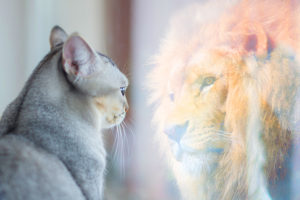
Understand that, in all of your stories, there is the Herbie—the ultimate constraint. Your work is to identify the Herbie, to leverage him/her so that, in effect, your team is all moving as one as quickly as you can, together.  Even if you are a business of one, there can still be a Herbie — your client, production partners, even colleagues.

A few things to note about Herbie.  First, not to be (too) macabre, but if you can push Herbie off the cliff during the hike, you should.  If there is an outlier that is dragging everything else down and you can eliminate the outlier, do it without remorse.  Whether it is a recalcitrant client, slow-as-molasses employee and/or production partner, if everything else can move demonstrably better without their existence, you want to focus on that speed rather than rationalizing going much slower than you should.  Believe that you, your art and your creative business exist to serve those that care the most about your best work and you will know that the value of pushing Herbie off the cliff if you can.  Always, cut ballast to soar to the height you are meant to achieve.

If killing Herbie is not an option (and it probably will not be), then you have to have a hard look at the cost of the Herbie’s you have.  For almost all creative businesses there is an extended relationship to get through the eight stages/four transitions of any project; definitely months and often years.  It means that time is your biggest risk and those that exacerbate that risk (i.e., your Herbie(s)) have to be the heaviest focus for improvement.  Whether it means looking in the mirror or taking off the rose-colored glasses you might have with respect to those employees, clients and/or production partners that do not respect the value and importance of time and its management, it does not matter.  You have to be brutal in the assessment.

I am particularly sensitive this time of year to the cacophony of advice most creative business owners receive this time of year.  The season is over (or about to be) and you are going to have the time to work on your business.  Things like, “improve sales”, “get better business”, “raise your prices”, “invest in social media”, “find your why”. And on. And on. And on.

I believe less is more and I am a total Karate Kid type.  Wax on, wax off.  Do the action and before you know it, it is in your DNA.  You are never ever going to think your way to success or find it by using this or that tactic or tool.  Great foundations exist because they are built one day at a time and then maintained with the integrity it took to build them in the first place.  My advice is to find your axiom and live there.  Let the bells and whistles come later (if at all).

Last year, my advice was to go take an improv class. Those that did tell me to this day that it was the BEST thing they ever did for their creative business.  My advice for this year: (re)read The Goal and then get to work on your Herbie(s).  And if you do, and you want to talk to me about your Herbie(s), I am all ears.  Twenty minutes of recorded time on me.  Link to my Calendly.  Tis the season of giving…

Desire

What does it mean to be the best in the world at what you do?  How do you get better?  Are you really willing to do the work?  The hard work it will take to challenge yourself at the edges?  Or are you looking for the silver bullet?  For someone to give you THE answer that will propel you forward to the place you believe you are meant to be both as an artist and a business?


As we come closer and closer to a sharing economy, where virtual and analog converge, the idea of incremental change becomes ever more the oxymoron it has always been. Radical change and radical authenticity is upon us as creative business owners.  Community is demanded and you are going to have to listen with different ears.

For most of you, you aim to make the sale and then to maximize the sale.  The ethos is to see it all in the short term as the client is likely to never repeat.  So you do what you can to get the “yes” and then go from there.  You might even study all that you can about generational trends to understand what people today are doing in an effort to be a chameleon.

Where am I going with all of this?  Tis the season to take stock of where you are and endeavor the future.  If you are listening to the pundits, you want to book more business, raise your prices, tweak what you are doing.  And like answering all of your email, you will feel like you have accomplished something if you heed the advice, right up until you are marginalized out of existence.  Yes, we are here.

For those of you who think 2020 is going to be like 2008, you might be right, just not in the way you think.  2008 was the beginning of the mobile age and all that the IPhone and its offshoots gave us.  It ushered in a historic four year boom for ultra luxury goods that businesses like LVMH (who, by the way, just bought Tiffany’s for $16.2 billion) and Bentley provided.  While the recession was deep and hard for many, for those that matter (i.e., the vast majority of your clients), it was the exact opposite.  So if you think 2020 and all that is happening in our political and economic landscape are the harbingers of doom, you are not paying attention to what the pervasiveness of streaming, 5G, AI, and the cataclysmic shift to a sharing economy are going to do for all creative businesses.

If this does not implore you to erase the proverbial box, I do not know what will.

To the practical, surround yourself with those who are wildly radical and imminently practical.  People who will say “what if we did it this way…” and those will respond with “I can build that…”  People who will expect you to fall on your head and then demand that you get back up.  None of us are very good at defining our own boundaries.  Sure, you might make more money and that is great.  Just do not do it for that reason.  Do it because you need to make a difference in the lives of those you seek to serve.

Mostly, it means we need to hear your voice, the depth of what drives you as an artist and creative business.  You need to know who you want to serve, why you will make a difference and then own the responsibility for the community you will have to create to make it all happen.  One person at a time. Drip by Drip as Seth Godin would say.

Today, the definition of professional is not stoicism, it is conviction.  Are you willing to appreciate the difference?  The default is that all we have is to do the same as everyone else, just a little harder.  Perseverance will win the day.  And you will have that message reinforced to you every day by those that believe in the indelibleness of the straight and narrow. 

What they will NOT do is take the time to have a look at your creative businesses and point out the disconnects.  They will tell you to flood the balloon with gas to make it rise higher without ever being aware that at the same time you are filling the balloon with air, you are filling the ballast with sand.  You might briefly rise, but you are simultaneously defining your own demise.

Here is my advice: do not do that.  Instead, make sure that what you do as an artist IS what do as a business. Most likely, it means jettisoning practices that might even be serving you today.  Radical change is not for the faint of heart.  However, the future awaits and the depth of your soul as an artist hangs in the balance.  If you own the urgency of the moment, know it might not work out, but you will never ever regret having leapt.

The Value Of Community

0

We have all heard how you are supposed to create a profile of your ideal client so you can focus on what she cares about and mold your creative business around her.  As with most things, it is like telling someone to wear a coat when it is cold, valuable advice, though not particularly seismic.

Instead of writing who you think she is, I am at a complete loss as to why you do not actually talk to her.  There are infinite ways to discover who she is.  Did she comment on any of your social media posts?  Have you met her, well, anywhere?  Of course, has she enjoyed your work directly at any point? Been to a client’s home, wedding, etc.?

Why not a composite of your favorites?  After all what you are looking for is a Venn Diagram (think the Olympic symbol) and the points and depth of intersection that you share with her.  Your clients do not need to be your clones.  In fact, quite the opposite.  They just have to deeply care about what you do as an artist and creative business.  Amount of intersection matters, depth matters more.

What then to do with this information?  You can craft your sales pitch to make sure you touch on your intersection, make posts more relevant to her, maybe even hone your business process to work better for her.  All good stuff.  Though more like telling someone to wear layers and not just a coat.  Better but not all that helpful.

No, what needs to be done with your ideal client is to establish community.  Community means dialogue and connectivity.  Up until now, the idea of actual, proactive conversation with prospective clients was a pipe dream.  And the thought of connecting those who come to you with each other was also virtually impossible.  Today, it should be expected with you, your art and your creative business as the hub.  Relevant, meaningful conversation with those you are directly trying to reach (clients) and they to each other.  You might be the catalyst to the conversation but you are not the only voice. Yours is to inspire others to use their own voices.  From there, opportunity will abound.  You do not need an audience of thousands, hundreds of the right voices will be more than enough.

No doubt, you must really know what you, your art and your creative business stand for to be the linchpin of the community. Definitely look hard in the mirror to see your entire reflection as you would want others to see it.  Radical authenticity will today and forever more be redundant if you choose to honor the power of the gift you possess and desire to share.

Then let your community teach you what could be and be open to the possibilities it presents.  It could be as simple as a style book you write for those that care about how you see the world to as complex as an entirely new business that is bigger than the one originally contemplated.  In today’s world, you, your art and your creative business are expected to pivot.  If you are having real, authentic dialogue with your community you just might (ok, probably will) see the road ahead before everyone else.

Want a quick example of something happening?  Warren Buffet’s fund Berkshire Hathaway just made an investment in Restoration Hardware (admittedly, not that big relative to his other investments, but still).  BH also happens to own CORT furniture rentals.  CORT is that granddaddy (fuddy duddy?) of rentals for temporary living (mostly for corporations).  CORT also happens to be a large player in the event rental business.  The chic furniture rental business is gaining tractionwith millions of dollars in venture capital pouring in to several startups like Fernish, Feather and now, Oliver Space.  I will not speculate further.  But if you are in the interior design, architecture, wedding/social event business, what do you do with this information.  What can your community teach you about what YOU could do here?  Or you can draw up who you think your ideal client is, throw out a few pieces that might make her bite, have a one way conversation and call it a day if she says yes.  Your choice.

Follow The Money

Streaming is here to stay.  Check out this New York Times article about Disney’s entrance into the sphere.  Do not be put off by the rough technological start (glitchy/crashing app).  When the biggest content provider on the planet decides to go all in on streaming, we all have to do more than take notice.  Oh and Apple, Comcast, and HBO are also jumping in.  2019 marked the first time that more people subscribed to streaming services (613 million) than they did cable (556 million).  Streaming allows us to customize our user experience, watching whatever we want to watch, whenever and wherever we want to watch it.  All for a relatively modest fee that is already collectively less than cable.

Make no mistake, this is about data and the ability to generate content that consumers will want to watch at the micro level.  It is the long tail in the most extreme.  Streaming validates the power of doing things for those that care and being ok that it is not for everyone.  Streaming also changes to value of ownership of intellectual property.  Like the music business, why would you buy a movie when you can always have it available to stream?  The economics are easy: if say you have to pay $400-$800/year to have access to all the content you would ever consume and it is $15-20 to buy a movie and/or CD, if you ever wanted to consume more than thirtyish of these items in a year, streaming wins. Also, if you feel like you are not getting value, you can stop and start at any time.

What does this mean for creative business?  That really is not the right question, the right question is what doesn’t it mean? When mega businesses are doing all they can to create relevant content that will matter to the smallest viable audience, our culture shifts.  Your clients will expect a level of granularity that “trust me” will never provide.  Your portfolio is irrelevant other than as a generic marker of who you are as an artist and creative business.  No more than a storefront, your portfolio might lure someone in, but it will never ever make the sale for you again.  Your collateral had better do more than just show pretty pictures if you expect to move forward.  It must tell your story and the journey of creation your clients can expect.

Next, micro consumption.  M.A.S.H. had 106 million viewers for its final episode and averaged 50 or so million per week at its height (and it was never a number one show).  For the first half of 2019, The Big Bang Theory was the number one show and averages 18 million viewers.  BBTs stars all made more than one million dollars per episode and, of course, have a percentage of syndication. Streaming is going to take that even further because each of these services will know who is watching, when and where.  Think about that.  If Netflix knows everything about the five million people who are obsessed with baking shows, wedding shows, interior design shows, what does that let them talk about?  What about Amazon? Apple? Disney? No connection?  How about Le Creuset, one of the highest end cookware companies partnering with Disney to create a Star Wars line?  Of course, the success of the line is yet to be determined but the idea was not borne out of thin air.  Somebody figured out that avid at-home chefs are also Star Wars fans.  Good luck being the same but just a little better in the future.

We are about to live in a world (if we are not already) where mega businesses know more about your clients than you ever will.  The expectation will be that because clients will know that this is true they will expect ever more personal experiences.  It used to be that, to paraphrase Seth Godin, “we made this for you” was unique and special versus here is your Starbucks Latte.  Now, it will be a baseline.  So if this is true, then what will you and your creative business need to do to move forward?

Simple.  Invest in relationship.  Creative businesses have nothing to do with the art they sell.  They are communication businesses tasked with first translating senses and then using the translation to create a transformational experience.  The foundation is information flow through profound and on-going multi-media communication.  While you may never have the upfront information about a client that mega-businesses have, you do have the ability to dig incredible deep into the humanity of all that you do.  Most of you have built your businesses to do the exact opposite.  If you make your money on the sale of stuff or the amount of stuff you service, then the more you sell, the more you make.  If value does not come from creation (as it so often does not), then your business is built to diminish communication not grow it — you will do as little as possible to get to yes as the faster you get to yes, the more you will make.  Pushing the edge of communication makes no sense if there is a risk of losing the sale (i.e., the yes).  If you get paid for creation, you will invest in what it takes to communicate creation and the spiral will ratchet upwards.

The lesson that streaming should be teaching you is that if you do not pay attention to the implications of the long tail, the need to invest in relationship and all the communication tools (of all media) to redefine the value most creative businesses have heretofore delivered, you are going to be left behind. Individual human relationship, with compassion, empathy, even sympathy for the journey ahead is a prerequisite to your art and your creative business, now more than ever.  To make that a reality, how your creative business runs and redefining what matters to you as an artist and business has to happen — yesterday.  Those who are unaligned in their art and business (i.e., the mission of your business and art are opposite) will be exposed ever faster and marginalized out of existence much faster than even I ever thought.  Be who you are with impunity or exit stage right.

To What End Promotion?

As the season winds down for most creative businesses, attention turns to marketing/business building for the future.  Whether that is attending conferences, participating in showcases or doing some other form of promotion (social media or otherwise), now is the time when it all happens.  The question then is how do you decide what path you will go down?  If all you are doing is for the exposure or networking value, you have to ask yourself not just what the potential return is but much more importantly what the marginal value is for your creative business.

If you are relatively new to the business and are looking for an opportunity to show all that you can do, then the return for attending a high profile conference or showcase is invaluable.  You have to be in the circle if you are ever going to get to dance in it.  If however, your art and creative business are more mature, then you are already in the circle and dancing in it and attending for that reason is a non-starter.  You might have to maintain your status but that is an entirely different calculation and needs to be considered versus other opportunities where that status might be validated.

Here is an easy way to think about it: if you are say, Versace, then, of course, you need to attended the Milan or New York fashion shows.  You will likely spend (and lose) a ton of money investing in your couture line for these shows.  These shows are what keeps Versace and its brand at the forefront of fashion.  How about the Topeka fashion show?  Maybe there are a few buyers in Topeka and going there might increase name recognition but likely not.  In the case of the Topeka fashion show, Versace’s presence legitimizes the show, not the other way around.  With the poles of Milan and Topeka it is easy to see the choice Versace has to make — attend Milan, skip Topeka.  Moving towards the center is when it becomes hard and requires discipline to decide whether it is a true value add or not, or if it is something that needs to be compensated for.

The only way to evaluate the middle is to look at the margin.  What happens when we do the next show?  Do we move ever edgier or is it just a placeholder?  Just a placeholder can safely be skipped as they do nothing for the brand.  Ever edgier offers a marginal return as it does reinforce the position Versace wants to maintain.

Of course, the next question if you have reached the level where your art and creative business have come to mean something is when do you have to choose yourself?  At a certain point, attending all of the conferences, showcases, etc. will have to be weighed against choosing yourself.  I am taking Seth Godin’s idea one step further.  Not only will external validators become meaningless to you as you are already in the circle, your unwillingness to do the hard work of choosing yourself and celebrating your status with meaningful, related content to those that care will itself jeopardize your hard-earned status.  This entails providing meaningful content to those that care.  Whether that is through a “think-piece”, a podcast like series or other form of collateral that reminds all that you are who you are, I cannot say.  What I can say is that you have to do that work.

You are relevant because you push the boundaries on your own for all to see.  My supposition is that it is not enough to just be in the circle any more.  You have to define the circle.  And yes finding the audience for the circle will be ever more difficult.  One conversation at a time is the path to community with the depth of your expertise leading the way as to why you matter as much as you do.  A longer, more exacting process for sure.  In the insta world, the challenge is to own the value of relationship.  The tools to develop that relationship digitally are only going to get better.  At a level, failing to use them is an indictment.

So why not skip the next conference this year and think about the hundred people that matter most to you, your art and your creative business?  Go start something that means something to them.  Then do not stop.  First, it is something you really need to do.  Second, I am confident an entirely new world will reveal itself as you go down the path you defined for yourself. A brave new world means we get to be brave enough to see what awaits.

Resilience

The interesting idea that confronts all creative business owners is grit to stay true to your vision when it gets challenged.  So much attention is paid to marketing, to making the sale, even starting to work with a client in what will most certainly be a honeymoon period.  However, when tested (and you are always tested), there is reversion to appeasement and alienation of what you need to do the work you do.

When money does not flow, what do you do?  If your client backtracks on an approval? When the budget explodes/implodes?  In other words, what happens when you are punched in the face ala Mike Tyson? It is too easy to say that you will stick to your guns/contract and enforce things.  Most of you do not want to be the bad guy so you compromise and hope that it all takes care of itself.  Sometimes it actually does.  However, most of the time, things start to slip bit by bit until you feel like you are no longer in control.  Then you suffer.

As with all things, festering issues grow to the precipice and force you to go thermonuclear or eat it all.  If only handled at the moment, with the gravitas of understanding what will happen if left alone, then there would be options and consequences.  To act in the moment though means that you appreciate how important each and every step of your process is and the value you assign to each.

The biggest lesson I wish I could impart on all creative business owners is that if you do not honor value delivered, then there is no chance your client will.  Yes, different value for different moments (prepping for the performance vs. actually performing), but that does not mean you can move past the moment in the hopes that the future will preserve its value.  Never happens.

Your clients will want assert value as they see it.  If it is not as you would have it, then your willing to accede to their behavior is literally flipping the keys to them.  Just not something you can do.  So make each value point matter and enforce it with the consequence that there will be no movement until the issue is resolved.

How then do you teach resilience?  You do not. You teach compassion, conviction and faith.  Clients are more powerful than you. They can bully you, cajole you, even shame you.  What they cannot do is actually be you.  If you do not believe in the purpose of what you do and the very reason you were gifted with the talent, experience and wisdom to create in the first place, who will?  This is the beauty of your creative business, only you can do what you do, how and why you do it.  Learning to live that truth is a skill as much as learning to market, or to be a better artist.  Due respect to those who provide advice as I do to creative businesses, ignoring the ethos of you business and the how’s and why’s of what it does in the effort to not “lose” a client (i.e., make the sale) is a foundation of sand.

We all need to improve at seeing the whole picture within the moment.  The days of “trust me” are gone.  You have to earn that trust every day.  Gratefulness ends at the opportunity, the rest what you do on your stage.  Define value, earn value, then rinse and repeat.  If you go astray come back to the moment and start over.  Ignore it at your own peril.

Scale Is Not A Magic Bullet

0

The inroads e-businesses have made into creative businesses have driven most creative business owners to the idea that scale — diversifying revenue streams is the only way they are going to survive.  Whether it is some sort of e-design services for interior designers, day of/month of services for wedding planning, even drop-off rentals for special event rental companies, the goal is always to generate extra revenue and to somehow reduce the seasonal feast/famine cycle.

I have talked a lot about analyzing potential opportunities with A Perfect Egg analysis and also to focus on the strength of your creativity versus the low hanging fruit that you are good at, but not necessarily great.  Both The Perfect Egg and focusing on strength are still vital to this discussion but this post is focused on the foundation underneath.

What are you getting paid for, why and when are questions I STILL see creative business owners across the board struggling with.  When clients push back that you are too expensive, colleagues band together to effectively blame the client.  What does not happen is to ask why? Is it the wrong client?  Is the model off?  Is it confusing?  Does it not pass the smell test?

And here is where I am going to make a huge statement.  If creative businesses do not as a whole, get exponentially better at defining value for clients, colleagues, hey, the general public, they are going to be marginalized out of existence.  Why?  The aim of every toolmaker is to convince the world that the tool is the artisan so that it will reap the rewards of that role, not the artisan.  When tools were effectively in the stone age (nobody would think Excel would be your designer) no-one thought twice about this idea.  Now, when the tools are as powerful as they are and the lines blurry (hello, Havenly, Modsy, All Seated), the gap is almost closed.  Make no mistake, the issue is not going anywhere.  Just wait until 5G becomes universal —- next year.  The speed of relationships and the leveraging of personal information will take these tools to an entirely new stratosphere.  Listen to Seth Godin’s parable(?) about a smart refrigerator and you will get the idea.

So go ahead, focus on scale, diversifying your revenue streams to prevent your feast/famine cycle, see how that works out for you.  I say it with tongue and cheek because unless you have the capital being devoted to these tools (e.g., last week Havenly raised another thirty two million dollars), competing with them will be a very steep uphill battle.  Instead, let’s focus on value and, as an industry, demanding to be paid for what gets delivered relative to other things.

Sounds obvious right?  Not so much.  Here is a thought.  If you charge by the hour as so many of you do, how come you charge the same hourly rate regardless of what you are doing?  Have you contemplated what that means for your business?  Oh, and presumably you have gotten better at what you do as you move forward with your career.  Has your hourly rate grown at the same rate?  Likely not.  Do you know what THAT means?  If you have the same rate that is less than your efficiency, you are telling everyone that you have to work on things that do not matter to you to make what you need to make.  See, what you need to make has not changed (in fact, what you need has probably gone up) but you get done in a fraction of the time so you need to do more tasks to justify the hours — less valuable tasks.

The hourly example is how we all live with canards in deference to expediency regardless of the compromise.  Simply, this is just not good enough any more (not that it ever was btw).  How you do things has to make sense to you, your clients and colleagues alike.  Moreover, we all have to defend those value points as intrinsically valuable even if they are not yours.  Because I said so or because that is just the way it is done is over if only we all commit to making it unacceptable for ANY creative business owner to just mail it in.  Clarity requires education on both sides and confusion is the ally of those who want to dismiss your value altogether.

Opportunities will abound with a stronger foundation for all creative businesses.  I am all for diversified revenue streams and scale, but not as an answer to structural flaws.  First things first.

Figuring It Out

0

There is so much noise coming at us from just about everywhere.  It feels like everyone wants your attention, even if only to get your attention.  For your creative business, well meaning people and businesses want you to use their product or service to take your business higher.  Each is the solution you seek and offers you the path forward.  Maybe.

And you can get lost in the mental masturbation of figuring it all out.  At a certain point though, you just have to dance.  Perhaps you can dance better tomorrow (and hopefully you will), but that is tomorrow.  Today, you have to just be where you are, out of your head, out your heart and just feel it (ht David Gray).  When you are always picking at the edges, sometimes you forget that the whole point is to be fully in it.

Giving yourself permission to be fully in it though requires that you be vulnerable, that you are on the right stage to give your performance the best chance to shine.  These are two voices that you have to hold in your head simultaneously and you have to distinguish the two not just to yourself but to clients, employees, colleagues alike.  On the one hand, you speak as an artist, the one who sees the world your clients so desperately wishes to inhabit for themselves.  You share your world so theirs is transformed in the effort.

On the other hand, you speak as a business in order for the artist to thrive.  It is not the same voice and one does not justify the other, despite their inexorable connection.  No, each voice is its own glory if you permit them to be.  The beauty of “and this is how we do it.” is sadly lost on so many creative business owners.  What it has become is this battle of ego, a power struggle where, too often, you are (sometimes literally) stealing what you need to do your work.  To those who would teach the art of the con, shame on all of you.  And make no mistake, if you are just trying to figure out how to get a client to say yes without regard for the implications of the yes, you are engaging in manipulation (or worse) and, in the end, no-one will win.   Not you, your client or, least of all, your work.  Compromise is the death of creativity.

Instead, set about earning permission to do the next thing.  Then the next and the next after that until you are done.  It means you have to know all of the necessary “nexts”  and why they are nexts.  It means you have to know what happens if the “next” is delayed or does not happen.  It means you have to lay out the beauty of the map for all to enjoy with the perils of the cliffs front and center.  Use your business voice with integrity and intent and joy that you heretofore have only given your art.

Confidence. So easy to say, “be confident”.  However, if you have never used the voice or have no idea that you are, in fact, using two voices, it is very hard to be confident.  Worse, if you use the voices of others that are not authentic to your own, you will also be hard pressed to feel your own power.  Nope.  The beauty of your business voice is that it is your own.  Go to work on that every single day no matter the noise.  The rest will take care of itself.

Lesson Learned?

0

Ok, if two years ago you were responsible in some way for a colossal tragedy.  Since then, you have tried to be better at prevention and preparedness.  And you have made huge strides on so many levels.  The situation arises again and you try to show everyone that, this time, you are ready.  You have learned how to be better and now is the time to prove it.  The thing is if you do not take care of the crucible of trust, no matter how small, you have no chance to get the trust you seek.  This is happening in real time here in Northern California to PG&E.

The weather conditions are the same as those existed when the massive fires started exactly two years ago yesterday.  PG&E has been held responsible for starting that fire and has worked since to improve its disaster prevention protocols.  As the world knows, they shut down power to 800,000 customers in an attempt to minimize the risk of fire.  The readiness plan has been extensively vetted and discussed.  So the one thing that HAS to work as you plan on shutting power off to more than a million people is for those people to know if, how and when they are going to be affected.  And in today’s world, that means the website HAS to be able to handle the demand.  It did not.  Now, no matter the work, the actions, the purposefulness of the decisions, it is all blown because the website cannot handle the demand.  Crazy.  Did I mention that we are in Northern California?  In the center of technology, the idea that you could not have a site capable of handling a massive hit at the moment of uncertainty is an utter non-starter.

The lesson for your creative business is profound.  You must identify the crucible of trust always.  Whether you are trying to recover from a misstep or simply trying to improve your process, the crucible of trust will be the determining factor as to whether your efforts will be deemed credible.  This is where you have to over invest in the solution and make sure there are no hiccups because there is no there there if you fall down here.  You can have the grandest mission statement, most purposeful story but if you need to be respectful and respond to those who earnestly seek your attention, ghosting them makes it all go away.

Your task then: what is your crucible of trust?  How are you making sure it acts as the defender of what you are seeking to accomplish?  What will you do if you fail again?  PG&E by the way has a tweet (!) that says that they know about the problem but are working around the clock to fix it.  Not exactly going to inspire trust since the tweet has been up for 15 hours.  Seth Godin wrote a post recently about choosing automation vs. humanity.  Is there a script for everything or can we just relate to each other with empathy, humility and kindness — each an opportunity to earn trust?  You can only win the race to the top with trust. Forsake trust at your own peril.

When you know what matters you can build a failsafe that can say you can rely on “x” to carry you through. Sometimes it does mean you just have to over invest.  PG&E did expect more traffic to its site, just not what it got.  This is the seed, the place everyone can rely on to say, “see, this is who they are in the midst of calamity (or change).” The crucible of trust is the very definition of the DNA of your art and your creative business.  It simply has to be there for you to move forward.

Last, the reason PG&E is such an amazing example for creative business is because of the emotionality of it.  We are talking about upending people’s lives, a created emergency and the wounds of a tragedy that are still healing. Rationality goes away when that happens and creative businesses ALL live in a world of irrationality.  Nobody needs what you do and there is a huge component of uncertainty, fear and, yes, heightened emotionality, that comes with every project.  You are called on to be human and inhuman at the very same time.  Human in your ability to transform those around you with your talent, wisdom and experience; inhumanity in that, in certain areas, you just cannot miss if you are to be considered a professional.

So learn what PG&E has not.  Over prepare for the moment where you know you will be defined no matter how small (or large).  The moment, your crucible of trust, is your self-described litmus test from which all things will stem.  It is the one place in your creative business where failure is not an option.